A calming corner becomes the key to regulating sensory overload and helping parents reset to be the best versions of themselves. Image source: Daisies in Clover
The following sections feature several affiliate links or ads, meaning we’ll earn a small commission if you purchase through these links. Please see our privacy policyfor more details.
For busy parents, managing the mental load is a skill and a challenge. Managing schedules, helping with homework, prepping meals, and all the other small everyday things that go into managing a family can leave you feeling exhausted and overwhelmed.
But you might not realize that you’re also dealing with some sensory overload on top of the parenting overload. It’s the sound of video games being played and kids bickering over the last bag of Cheetos in the house, all on top of incoming text messages and after-hours pings from teams. It can all leave your nervous system feeling frazzled.
That’s why the most essential space in your house isn’t the home office. It is the sensory refuge. The place where you can go and decompress, even if it’s just for a few minutes, to calm your nerves and escape sensory overload.
Beyond the Quiet Corner: The Science of Emotional Anchoring
A sensory refuge is more than just a cozy chair. It is a designated territory designed for nervous system regulation. When overstimulation and stress occur, cortisol levels spike. It can feel nearly impossible to respond to kids with the patience they deserve.
Creating a physical anchor in the home (a space specifically tuned to lower sensory input) is not just taking a break. It is an active way to help lower your stress levels and give yourself a quick mental and sensory reset.
Create an Auditory Sanctuary
The ears are often the first victims of sensory overload. To combat the noise fatigue of a busy household, your sensory refuge needs a dedicated auditory sanctuary.
A dedicated pair of noise-canceling headphones and a charging station/stand just for the calming corner is the first step to creating your new space. You can use the headphones to listen to soothing music, catch up on a few minutes of a podcast, or simply use them to create a wall of quiet for yourself.
Once you get in the habit of using your calming corner, the headphones become a signal to the rest of the family that you’re on a personal “time out” to recharge and reset.
Embrace the Concept of Texture-Maxxing
Design psychology confirms that tactile input is a powerful grounding tool. This is sometimes called texture-maxxing. It may sound like a silly buzzword to some, but the idea behind it is solid. The idea is layering high-contrast, comforting textures can send a signal to your system that you’re in a safe, cozy space and are ready to reset.
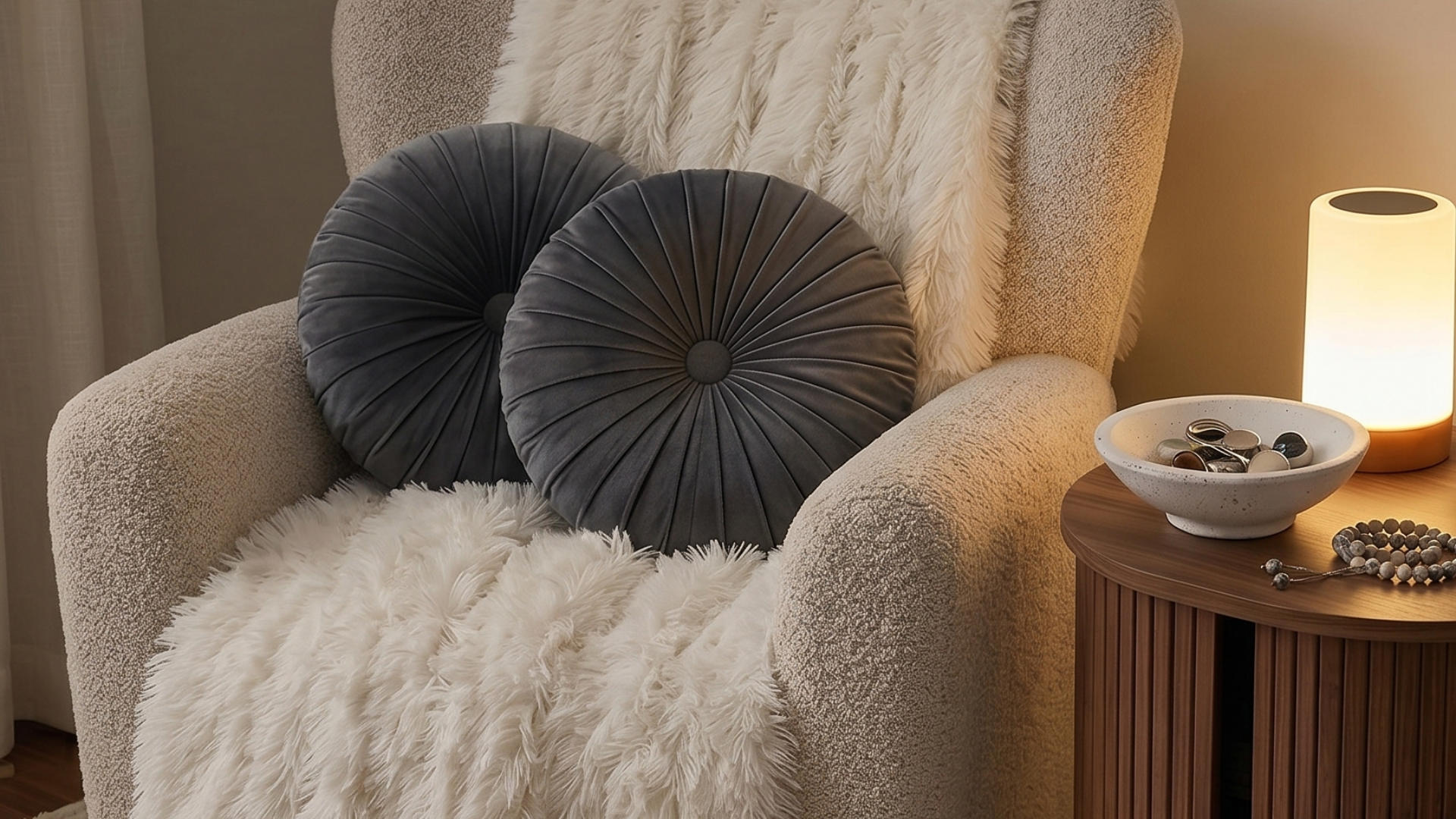
So, what does this look like for a sensory refuge? Layering different textures could mean using a weighted blanket that has a soft faux fur texture. It could also be choosing a plush set of pillows with contrasting velvet textures. It all depends on which types of fabrics and textures speak to you in a calming way.
Weighted blankets can feel like they’re wrapping you in a cozy hug or a quiet cocoon, and the plush fabric adds to the comforting feeling. If weighted blankets don’t work for you, consider a lightweight throw in a soft microfiber fabric.
Set Up an Elegant Sensory Bowl
Fidgeting is a sophisticated way for adults to bleed off excess nervous energy. Instead of plastic toys, curate a sensory bowl that feels like high-end decor.
A decorative bowl that coordinates with the other elements in your sensory refuge is the focal point of this idea. It’s the place where you store all the fidget “toys” that bring you comfort. Think worry beads, smooth river stones, metal haptic sliders, or even clicky keyboard fidgets.
The goal is to work off that nervous energy and refocus your mind without even thinking about it. Be sure to dedicate these fidgets to your calming corner. You can stash others in your desk, bag, or nightstand, but these are only for when you need that mental break in your quiet corner.
You Might Also Like:
Tool-Free Spa-Inspired Bathroom Upgrades
These simple style updates let you transform the look of your bathroom, creating a calming oasis without any reno work required!
The Complete Sensory Refuge Setup
Now that you have the main elements in place, it’s time to think about the rest of the setup for your quiet calming corner. Here are the essentials you can use to turn an empty space in your home into a mental reset center:
An oversized plush chair: Choose a chair that’s large enough for you to curl up in or stretch your legs. Thick padding, super-soft upholstery, and generous dimensions mean this chair is more than just a place to sit; it’s a place to take shelter from sensory overload.
A small accent table with built-in storage: This is the space where you’ll store all your essentials, including the headphone stand and sensory bowl. Choose a table with shelves where you can place puzzle books or other items that help you refocus at the end of a long day. The best tables for an adult calming corner have doors to keep things like slippers, blankets, and books out of sight. Having these items hidden means they’re more likely to only be used when needed.
A cozy area rug: Defining the space for your calming corner helps keep it separate from the rest of the room, whether it’s in your bedroom, living room, or den. A great way to define the space is with an area rug. Once you step on the rug, your quiet time has begun.
Soft lighting: A warm, glowing nightlight or a small lamp with dimmer controls adds just enough illumination without overwhelming the senses. If possible, find a lamp with a remote so you can control it without ever having to leave the comfort of your weighted blanket cocoon.
Blackout curtains: If the only space you have available for a calming corner is near a window, blackout curtains are a huge help. You may feel like your calming corner is too bright to use in the daytime, or you might have issues with relaxing on dark, stormy days. These curtains are the answer to those problems.
Modeling Emotional Intelligence
The most important benefit of a sensory refuge is the example it sets. When children see a parent intentionally step into a refuge, put on headphones, and ground themselves with soft textures, they learn emotional intelligence by example.
This practice shows them that being an adult does not mean being perfect. It means knowing when to take a step back, reset, and recharge.
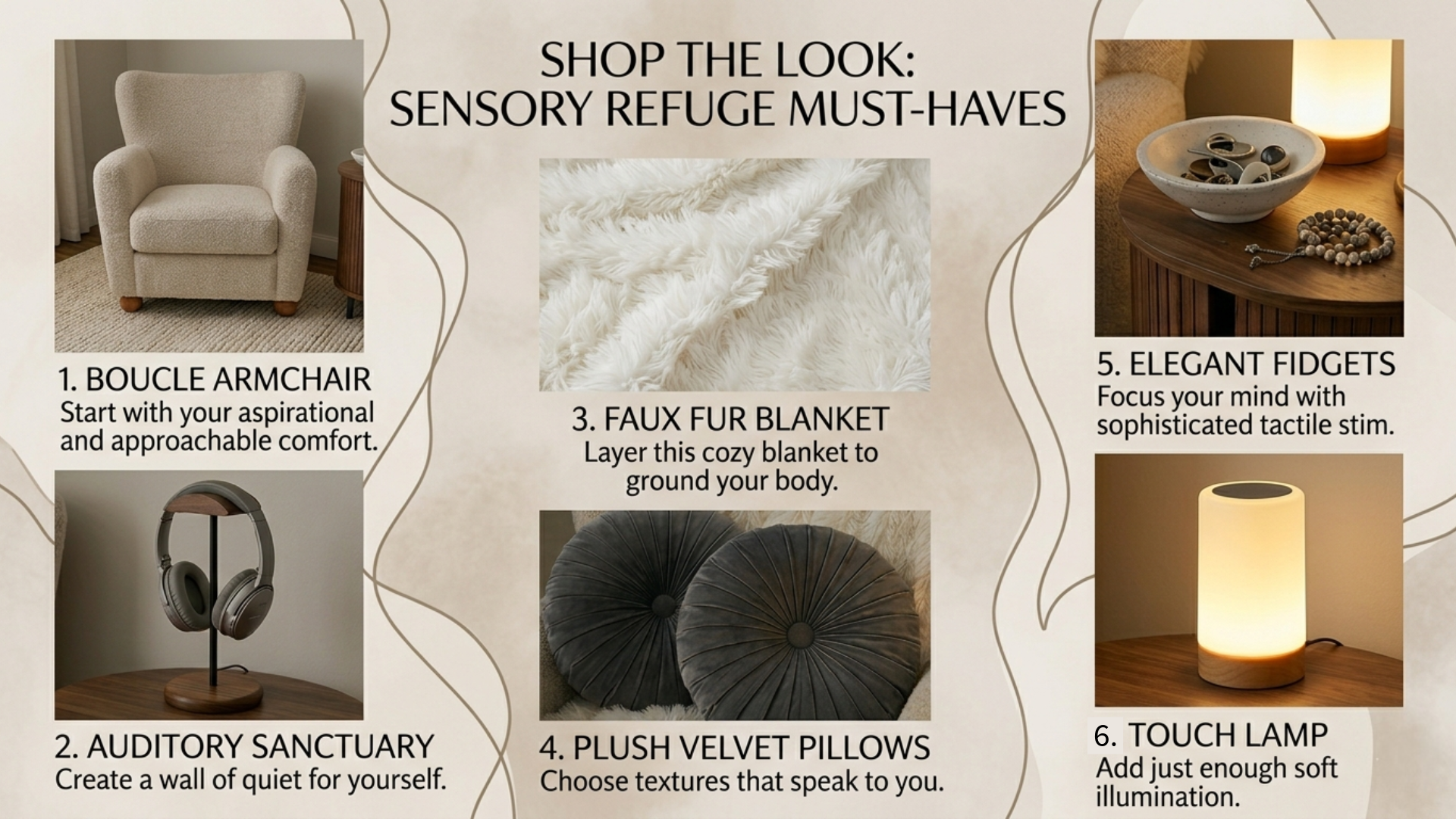
Visit our Wayfair Storefront to find all these essentials that make a calming corner for adults so relaxing!