How to Plan a Hide-and-Seek Easter Egg Hunt
Give Your Annual Easter Egg Hunt a New Twist!
The following sections feature several affiliate links or ads, meaning we’ll earn a small commission if you purchase through these links. Please see our privacy policy for more details.
Traditional Easter egg hunts can be fun, but eggs might just be too expensive this year! Plus, sending kids scrambling to find hard-boiled eggs hidden around the house can lead to a few that get forgotten until months later. Instead of going for a normal egg hunt, try a hide-and-seek Easter egg hunt this year! Here’s how to make it a success at your family gathering.

Why Host a Hide-and-Seek Easter Egg Hunt?
A hide-and-seek Easter egg hunt is easy to host indoors, which means you don’t have to worry about spring rain or unseasonably cold weather. It also eliminates the possibility of eggs getting lost in the house, only to be found again months later. This version of an Easter egg hunt is more of an activity, so you can control some of the chaos in your home. And, of course, it’s just plain fun!
How a Hide-and-Seek Easter Egg Hunt Works
For a hide and seek Easter egg hunt, each adult hides with a basket of plastic eggs filled with treats. This can be done indoors, or if you have enough space in the yard with good places to hide, it can also be held outside. When it’s time for the hunt to begin, the kids in your family look for the adults, not the eggs. Every time they find an adult’s hiding spot, they get a plastic egg with treats. Every adult should have a basket with enough eggs for every child in attendance. Because there are likely fewer adults than there would be eggs at a regular hunt, there are also fewer chance for kids to get a treat. Having a prize for everyone also makes things a little more equitable between different age groups.
Finding a hiding spot isn’t always easy, especially if you live in an apartment or a smaller home. Fortunately, the idea here isn’t to make the game hard for kids. Hiding behind a shower curtain, in a closet, or behind a couch is really all that’s needed. If you have a very large home, you can limit the search to certain rooms or make the game a real challenge by making the whole house part of the game.

Of course, you can always declare a winner if you like. The child who finds the most adults first could win a basket filled with treats or some other grand prize. Make things even more fun by having the kids judge each adult’s hiding spot, giving the winner a special treat. The treat could be a jumbo egg filled with larger prizes or a prefilled Easter basket that has candy, snacks, and treats already packed inside.
Variations on a Hide-and-Seek Easter Egg Hunt
You can adapt the hide-and-seek Easter egg hunt in a number of ways. The constant is that the adults are the one being searched for and not the eggs. This helps control some of the chaos, plus it gets everyone in the family involved.

The Hunt for the Easter Bunny
If one adult in your family is up for it, have them put on an Easter bunny costume before they hide. You can frame the entire game as a hunt for the bunny himself. The gifts the adult in the Easter bunny costume gives out should be a little bigger or better quality than the rest, giving everyone a special treat for finding the star of the game. If an Easter bunny costume isn’t in the budget, you can also opt for a bunny ear headband instead. Simply let the kids know the person in the bunny ears has the grand prize!
Easter Egg Scavenger Hunt
There are many different variations on the game you can try. Plan the hiding spots ahead of time and have one adult provide clues for each hiding spot. This scavenger hunt version of the hide-and-seek Easter egg hunt has kids working together instead of running around the house separately.
Easter Egg Treasure Map
For an Easter egg treasure map to work, you’ll need to plan out the hiding spots ahead of time. Draw a map of the house, noting a few landmarks for kids to get their bearings. Put an X on the spot where each adult will be hiding. You can have one map for the kids to share or you can divide them into teams and hand out one copy to each group. The goal is to find every adult using the map as a guide.

Tips for Easter Egg Hunt Treats
Depending on the ages of the kids who will be attending the hide-and-seek Easter egg hunt, you may need to vary the treats a bit. I personally like the idea of color-coding the eggs by age group to ensure everyone gets treats they can safely enjoy. Toddlers might love eggs filled with fruit snacks or goldfish crackers, while older kids can appreciate chewing gum and hard candy. Assign a color to each age group and share this information with all the adults who will be hiding. This will let them know which eggs to hand out to each child.
Make the hunt even more fun with novelty plastic Easter eggs. You don’t have to use traditional hollow eggs for this game, so consider different designs that add a playful touch to the holiday. These carrot, chick, and bunny eggs are great for younger kids, while these eggs that look just like chocolate bunnies are sure to delight elementary schoolers and middle schoolers.
If there aren’t a lot of adults to participate, small plastic eggs might not be the best option. You can find jumbo plastic eggs you can fill with more substantial gifts and treats. This idea is perfect if there will only be one or two adults available to hand out the eggs. Consider these 10-inch plastic Easter eggs with plenty of room inside for a small stuffed animal, candy, and other treats. Be sure to keep the eggs after the hide-and-seek Easter egg hunt so they can be used over and over again.
What to Put in Your Hide-and-Seek Easter Egg Hunt Eggs
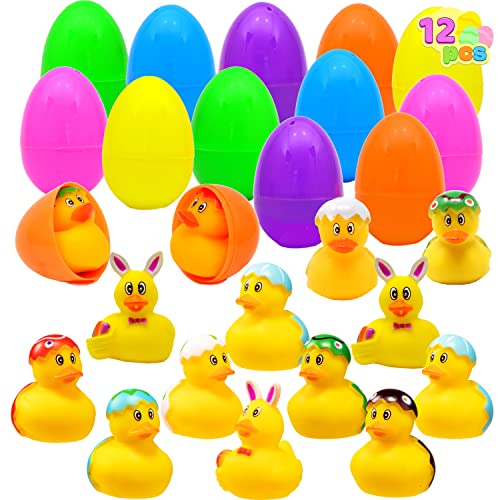
Traditionally, Easter eggs are filled with candy. However, not everyone wants to hand out a lot of sugar for the holiday. You can opt for smaller party favor-style toys, which come in convenient bulk packaging for events just like Easter. Teens and tweens might appreciate eggs that have a dollar or two inside (though you’ll want to do the math first because all those eggs can add up, depending on how many kids will be at the Easter egg hunt). Some other ideas for Easter egg fillers include:
Pre-packaged mini crackers
Flavored lip balms
Sensory Fidget Toys
Mini erasers
Be sure to check the measurements of any toys or other gifts to ensure they fit in the plastic eggs you’ll be using. You’ll also want to remember to get treats that are appropriate for each age group in the family so everyone feels included.
Hosting a hide-and-seek Easter egg hunt is a great activity for Easter morning, and it can also keep kids busy while Easter dinner is being prepared. If you have a large family, you may want to plan everything out ahead of time with the other adults. You may be able to split the cost and planning to make everything easier. You can also check out our other Easter blog posts and shopping guides for even more inspiration as you begin to plan your holiday festivities!
Hide-and-Seek Easter Egg Hunt FAQs
What age works best for a hide-and-seek Easter egg hunt?
This style of Easter egg hunt works best for kids ages four and up. Younger kids can still participate with simplified rules, shorter hiding times, or help from an adult or older sibling.
Can you do a hide-and-seek Easter egg hunt indoors?
Yes, this works well indoors, especially if the weather does not cooperate. Use clear boundaries, limit hiding spots to safe areas, and adjust the rules so kids stay within view if needed.
How do you keep a hide-and-seek Easter egg hunt fair for different ages?
You can level the playing field by giving younger kids a head start, limiting hiding zones for older kids, or pairing younger children with an adult. Another option is to rotate who hides and who seeks so everyone gets a turn.
How many kids work best for this type of Easter egg hunt?
Small to medium groups tend to work best, usually four to ten kids. If you have a larger group, consider splitting into teams or running multiple rounds to keep things organized and fun.
Do kids still need Easter baskets or prizes for this kind of egg hunt?
Baskets and prizes are optional. Many kids enjoy the game itself, but you can still use baskets, small prizes, or treats at the end if you want to keep a traditional Easter feel.