Practical Ways to Organize Kids’ Art Supplies at Home
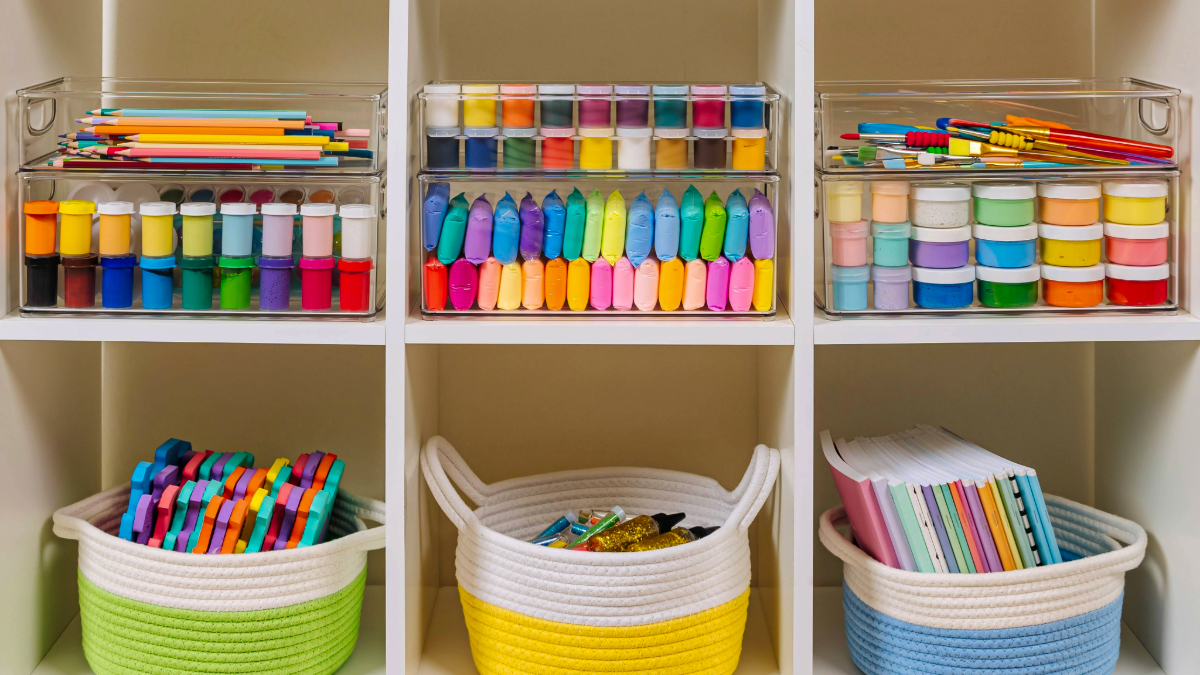
Image source: Shutterstock/Igisheva Maria
The following sections feature several affiliate links or ads, meaning we’ll earn a small commission if you purchase through these links. Please see our privacy policy for more details.
Keeping kids' art supplies organized is one of those things that sounds simple until glitter ends up in the carpet and dried-out markers are scattered across three rooms. Whether you have a dedicated craft space or just a corner of the kitchen table, the right kids' art supply organization system can make a huge difference, for creativity and cleanup. Here's what actually works.
Start by Watching How Your Kids Actually Use Their Supplies
Before you buy a single bin or label, take a few minutes to notice how your kids actually interact with their art supplies.
Do they haul everything out to the kitchen table, or do they mostly create in their rooms? Is there a dedicated desk or table they gravitate toward? Which supplies end up left out the most often?
Once you know where the art is actually happening, you can build your kids' craft storage system around that space. That might mean keeping a rolling cart near the kitchen, a cubby system in the bedroom, or a low shelf in a shared playroom. Designing storage around your kids' habits, not around what looks good on Pinterest, is what makes the difference between a system that lasts and one that falls apart in a week.
Set Up "Grab-and-Go" Art Supply Storage Zones
Instead of organizing by item type (all crayons together, all markers together), think about grouping supplies that get used together. This makes it easy for kids to grab one or two containers and have everything they need without digging through a dozen bins.
Simple, kid-friendly categories work best for everyday art supply storage:
Coloring tools — crayons, markers, colored pencils, and coloring books
Craft basics — glue sticks, scissors, tape, and construction paper
Special supplies — paint, glitter, stickers, pipe cleaners, and pom-poms
Will the bins stay perfectly sorted at cleanup time? Probably not. That's okay. The goal is to keep everything contained, not to create a system so complicated that no one uses it.
Which Art Supplies Should Kids Have Free Access To?
Not all art supplies are created equal, and giving toddlers unlimited access to glitter and permanent markers is a shortcut to a very bad afternoon. Splitting supplies into two categories makes your kids' art supply organization system more realistic and way less stressful.
Everyday Supplies (Kid-Accessible)
These are safe for kids to use independently and can live in open bins, caddies, or drawers in a bedroom or playroom:
Crayons
Colored pencils
Washable markers
Plain paper
Glue sticks
Child-safe scissors
Supervised Supplies (Parent-Controlled)
These are better stored out of reach, ideally in containers with secure lids, and brought out when you're around to supervise:
Paint and paintbrushes
Glitter
Permanent markers
Hot glue guns
Sequins and small embellishments
Secure lids also help keep paints and markers from drying out, which is a bonus. As your kids get older and more responsible, you can gradually move these items into their own art supply organizer in their room.
The Best Containers for Kids' Art Supply Organization
You don't need fancy or expensive organizers. You just need containers that make sense for what you're storing and that kids can actually use on their own.
What works best:
Open containers — easier access and faster cleanup
Clear bins — kids can see what's inside without dumping everything out
Shallow containers — deep bins are basically just waiting to be upended onto the floor
Caddies with handles — kids can carry everything from the shelf to the craft table in one trip
Small tackle boxes or divided containers — perfect for storing glitter, sequins, beads, and other tiny specialty supplies
The single most important rule when choosing an art supply organizer for kids: if they can't see it, they can't find it. Visibility is everything.
Where to Store Kids' Art Supplies in Your Home
Finding one central location for all craft supplies makes the whole system easier to maintain. There's one place to get things and one place to put them back. That simple rule eliminates a lot of the scattered-supplies problem.
Low Shelves and Bookcases
A low shelf or bookcase works especially well in playrooms or shared spaces. Make sure everything is within reach. If kids have to ask for help getting something down, they won't put it back either. Pair clear bins with simple labels (pictures work great for pre-readers) and you've got a kids' craft storage setup that practically runs itself.
Rolling Carts
Rolling carts are ideal for small homes or apartments where a dedicated craft room isn't an option. Tiered carts with trays, drawers, and cubbies keep kids' art supplies organized and contained, and you can wheel the whole thing to wherever the project is happening. When cleanup time comes, just roll it back.
Art Furniture That Doubles as Storage
If art is a regular part of your kids' routine, furniture with built-in storage is worth considering — especially if you're short on space.
Kids' Desks with Built-In Storage
A kids' art desk with shelves or drawers keeps everyday supplies contained in one spot and makes putting things away part of the natural routine. These work especially well for supplies kids are allowed to use independently.
Easels with Cubbies or Storage Trays
Easels with built-in storage are a great option for small spaces because they use vertical storage instead of floor space. Many include trays or cubbies for brushes, paper, and paints, so everything has a home right where it gets used.
Multi-Use Furniture for Shared Spaces
Benches with hidden storage, tables with compartments, and low cabinets can all work well in kitchens or dining areas — no dedicated craft room required. When choosing any art furniture, ask yourself:
Can kids reach what they're allowed to use independently?
Is cleanup built into the design?
Will it still work as they get older?
How to Keep the Organization System from Falling Apart
Here's the part that matters most. Even the best kids' art supply organization system won't last if it's too complicated to maintain on a regular Tuesday.
A few things that actually help:
Keep fewer supplies on hand. Rotating materials instead of storing everything at once reduces clutter and keeps art time feeling fresh.
Aim for quick resets, not deep cleans. A few minutes to put things back is all it takes on most days.
One in, one out. Put something away before getting something new out. It sounds simple because it is — and it works.
The best organization system is the one your kids can actually maintain themselves. If cleanup feels manageable, they'll do it.
What to Do With Finished Artwork
You don't need to keep everything, and you don't need to feel guilty about letting things go.
A few low-stress options for managing the artwork pile:
A short-term keep bin — everything goes in, then you sort it together once a month
A display area — a corkboard, clipboard wall, or string with clips gives artwork a real home without taking over your space
Photo and recycle — take a photo of each piece and let the paper go; you can even compile the photos into a printed photo book through a service like Shutterfly
Rotating frames — some frames are designed specifically to store kids' artwork and let you swap out what's on display
Managing the output is just as important as organizing the supplies. Keeping artwork at a reasonable volume makes room for more creativity without turning your home into a storage unit.
Frequently Asked Questions
What is the best way to organize kids' art supplies? The best kids' art supply organization system groups supplies by how they're used together (not by type), uses clear and open containers kids can access independently, and lives in one central location. Keeping the system simple is more important than keeping it perfect.
How do I keep kids' art supplies from taking over the house? Designate one central storage spot, limit the number of supplies that are out at any given time, and rotate materials periodically. A simple rule, put one thing away before getting something new, goes a long way.
What containers work best for kids' art supply storage? Clear, open bins and shallow containers work best because kids can see and reach everything without help. Caddies with handles are great for transporting supplies, and small divided boxes or tackle boxes are ideal for tiny items like glitter and beads.
Should I separate art supplies by age or access level? Yes. Keeping everyday supplies (crayons, washable markers, plain paper) accessible to kids independently, and storing messier or more permanent supplies (paint, glitter, permanent markers) in a separate parent-controlled area, makes the whole system safer and easier to manage.
How do I get kids to actually put their art supplies away? Make cleanup as easy as possible. Use open containers with clear labels, keep the storage location close to where art happens, and aim for a quick daily reset rather than a big weekly cleanup. When putting things away is simple, kids are far more likely to actually do it.
What should I do with all the finished artwork? A rotating display area (corkboard, string clips, or a special frame) gives artwork a home without piling up. For pieces you want to keep long-term, photographing them and compiling a printed photo book is a great low-clutter option.